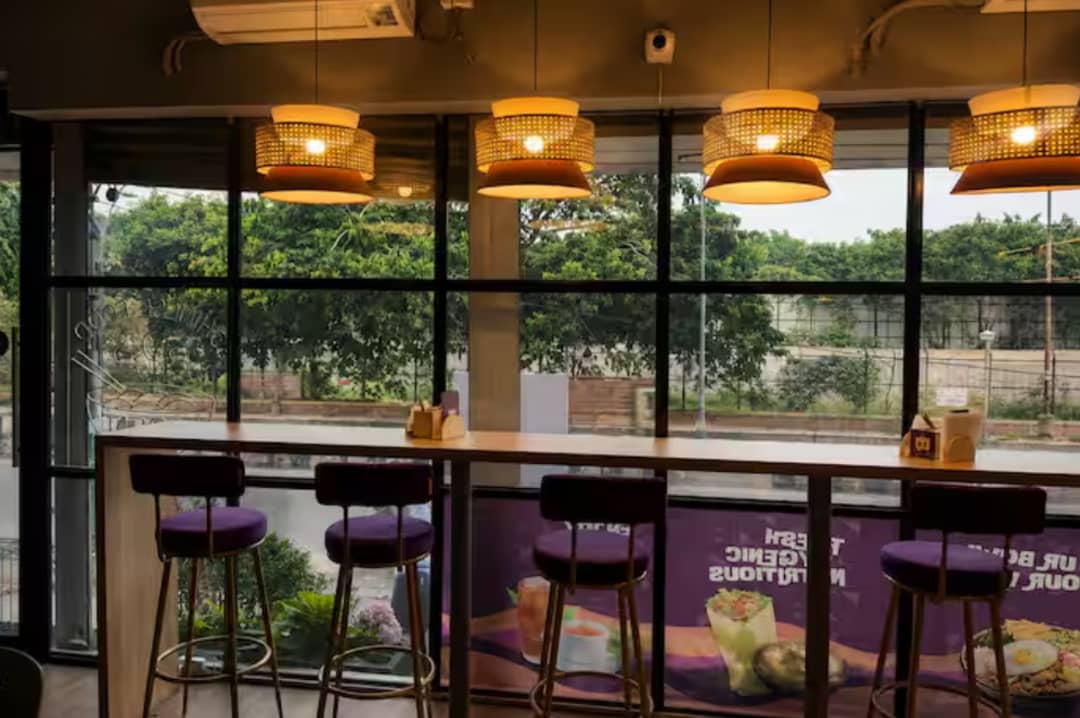
In September 2024, The Hindu ran a story titled "Xin Den in Bengaluru: Asian twist to traditional coffee house culture". It caught us off guard, in the best way. What began as a quiet neighborhood room in HSR Layout — meant for our diners, our questions, our ideas — had suddenly been read by every literary uncle in South India. Since then, that single article has changed the kind of guest who walks in on a Saturday afternoon.
We wanted to tell you the fuller story: why we built Xin Den to look and feel the way it does, why we quietly love the comparison to coffee-house tradition, and what actually happens between a plate of Vietnamese banh mi and the idea card on your table.
The coffee house we grew up hearing about
Every Bengali child hears about the Indian Coffee House on College Street the way American kids hear about the Beat poets of San Francisco. That is where the poets fought over coffee, where the filmmakers argued about censorship, where the economists sketched entire industries on the back of a napkin. A single room with worn tables where an idea could live longer than the meal that funded it.
That room is disappearing. Not just in Kolkata. In Chennai's Mylapore, in Kochi's Fort area, in Chandigarh's Sector 17, in Coonoor's Bedford Circle — every city had one. Almost every city has lost one. The internet, the phones, the pace of eating alone in front of a laptop killed the long lunch.
What Xin Den is trying to do
Xin Den, on 14th Main Road in HSR Layout, is our attempt to bring that room back. Not by pretending to be a museum — nostalgia is a bad restaurant category — but by making one small structural change: every table at Xin has a card on it with a question. Not a menu prompt. Not a game. An honest question about a place we love, an idea we're chasing, or a small thing worth thinking about.
You write your answer with a QR code on the card. Your idea goes to our Canvas — a living wall on xin.community — where every other Xin diner can read it. The best ideas of each month go on our physical showcase wall, and the ones that become real (a new dish, an event, a challenge) come back to the diner in the form of a free bowl and a small ribbon.
It is not marketing. It is the room. If the coffee house of College Street had a QR code, it might have kept more of its energy through the phone-obsessed decades.
Why The Hindu piece mattered
Rooms like this rarely get seen by the food press because they don't fit the usual categories. We are not a fine-dining destination in the strict sense. We are not a fast-casual chain. We are not a "concept" — a word chefs and journalists are equally tired of. What Xin Den is closer to is a workshop that also happens to serve some of the best banh mi in Bengaluru.
The Hindu piece was, for us, a moment of being understood. The writer noticed the cards. They noticed the wall. They noticed that at 3pm on a Wednesday, four strangers at four different tables had been quietly drawing the same architecture idea on the reverse of their napkins. That happens in our room. It is not a marketing story. It is the room.
What comes next
Since the article, we've opened Xin Fine in Koramangala (a slightly quieter, slightly more grown-up room) and we are opening Xin — Coonoor on August 14, followed by Xin — Ooty inside Aventura in the Nilgiris. Each room takes a slightly different form. Xin Den is a workshop. Xin Fine is a tasting table. Coonoor will lean into hill-food and slow beef bowls that Bangalore can't serve. Ooty, tucked inside Aventura, will be the family-holiday version — where you get the food after your Ooty Toy Train ride.
But the card, the wall, the invitation to sit longer than the meal expects — that stays. That is what The Hindu saw. That is what Xin is.
A small ask
If you've been to Xin — Koramangala, HSR, Coonoor, or (soon) Ooty — leave us a Google review. Not because we asked. Because a room that runs on ideas needs the next reader to know it exists. That single Hindu piece changed our Saturdays forever. Your review does the same at slower speed. Thank you for reading.