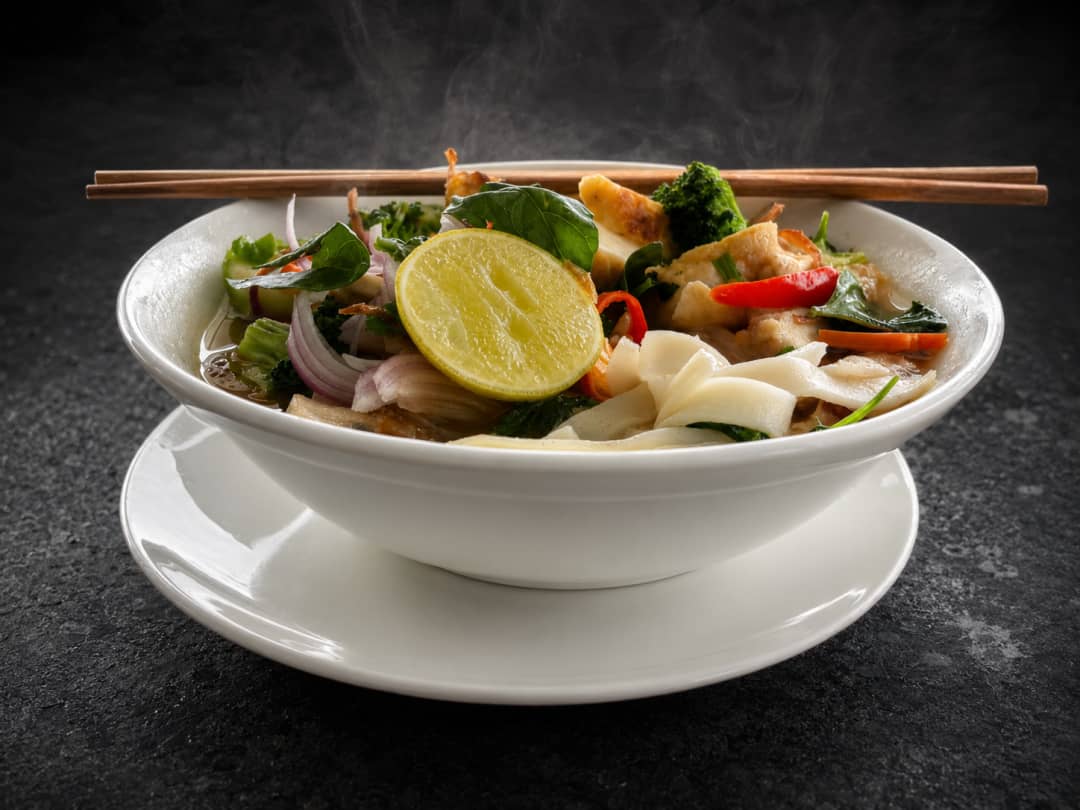
When we decided to open a pan-Asian restaurant in Coonoor, the kitchen team did not just pack up the Bengaluru recipes and drive up the Nilgiris. They ran tests first, because at roughly 1,800 metres above sea level, the physics of cooking changes in ways that are quiet, persistent, and genuinely important to how food lands on your tongue.
The Boiling Point Problem
Water boils at 100°C at sea level. In Coonoor it boils closer to 94°C, sometimes a degree or two lower depending on where the barometer sits that morning. That gap sounds small. In a pho broth that is supposed to hold a bare simmer for six hours, it is not small at all. The collagen in the bones softens at a different rate. The fat emulsifies differently. The clarity of the broth, which is partly a function of temperature discipline, requires a recalibrated instinct from whoever is standing at the stove.
Most cooks know this abstractly. Far fewer have actually reworked a broth recipe because of it. We had to, and the result is a pho that is actually cleaner and more delicate than its Koramangala counterpart, not because we aimed for that, but because the mountain forced our hand.
What Changes in a Braise
Braising is where altitude does its most visible work. A braise depends on sustained heat transferring through liquid into a tough cut of meat over time. When your braising liquid is boiling at 94°C instead of 100°C, you are working with a ceiling that is genuinely lower. The connective tissue takes longer to break down. The window between underdone and falling apart is narrower.
Our Nilgiri beef, which is sourced only here in the hills and appears on the Coonoor and Ooty menus exclusively, went through four rounds of testing before the braise timing felt right. The cut itself is different from what reaches the city, leaner, with less marbling but a cleaner flavour. The altitude braise, once we stopped fighting it, turned out to suit that leanness. The meat holds its shape better, absorbs the aromatics more evenly, and does not turn to mush the way a shorter, hotter city braise might.
Three Recipes We Rewrote
The pho broth was one. The Chengdu wok bowl was the second, and for a different reason. Wok cooking depends on very high pan temperatures. The lower boiling point of water does not affect the wok directly, but it does affect how quickly moisture in vegetables evaporates during the toss. In Coonoor, vegetables release steam at a lower vapour pressure, which means a wetter, less caramelised result if you use the same timing as in a sea-level kitchen. We adjusted by cutting thinner, cooking shorter, and using a slightly wider wok to give moisture more surface to escape.
The third recipe was our laksa base. A good laksa paste blooms in hot oil and then emulsifies into coconut milk. The emulsification step is temperature-sensitive. At altitude, we found the paste was not fully blooming before the coconut milk went in, leaving a faint raw-spice note. The fix was simpler than expected: we bloom the paste for ninety seconds longer and add the coconut milk off the highest heat. The result is a rounder, less aggressive laksa than you will find in the city outlets.
The Four Hills-Only Bowls
Beyond the rewritten classics, we built four bowls that only make sense in the hills. The Nilgiri beef pho uses the altitude-adjusted broth with the local braised beef and a handful of Nilgiri herbs that do not travel well to the city. The Coonoor laksa swaps in local vegetables from farms less than ten kilometres away. The Mist Bowl is a cleaner, lighter Vietnamese-style broth with poached chicken, ginger, and a soft-boiled egg, designed for cool mornings when you want something restorative rather than rich. The fourth is a Chengdu wok bowl built around seasonal hill mushrooms, which have an earthiness that holds up to the chilli-bean paste in a way that cultivated oyster mushrooms from the plains simply do not.
Visiting Xin Coonoor
The restaurant sits in the quieter part of town, away from the main bazaar crowd. Every table still has an idea card, same as in Bengaluru. The ideas that come in from the hills go onto the public Canvas alongside suggestions from Koramangala and HSR, so a thought someone had over a mist bowl in Coonoor could end up shaping a dish in the city. The dining room is smaller than our Bengaluru outlets, which means we do take reservations seriously, especially on weekends when the town fills up.
The altitude did not ask permission before changing how our food cooks. We just had to pay attention. If you are coming to Coonoor, bring an appetite and enough time to sit with a bowl and watch the mist come in. The kitchen has done the physics. You just have to show up.