Why Laksa in Bangalore Tastes Better When the Spice Paste Is Right
A bowl of laksa has a way of making an ordinary meal feel like a little adventure. There are springy noodles to twirl, a fragrant coconut broth to savour and just enough chilli to keep every spoonful exciting. But have you ever wondered why some bowls of laksa taste wonderfully layered while others feel like little more than spicy coconut milk? The secret lies in the spice paste, the flavour-packed foundation that makes this Southeast Asian noodle soup so special. For anyone exploring laksa in Bangalore, understanding this one ingredient makes the experience even more delicious. Because when it comes to great Pan-Asian food, the magic is often in the details you cannot see.
What Makes Laksa More Than Just a Bowl of Noodles?
Laksa is a beloved noodle soup with roots across Maritime Southeast Asia, particularly Malaysia, Singapore and Indonesia. Although recipes vary between regions, the dish brings together noodles, aromatic seasonings and a broth that can range from rich and creamy to bright and tangy. Curry laksa is the version many coconut curry lovers gravitate towards. Its warming, spiced broth often includes coconut milk, with ingredients such as chicken, prawns, tofu puffs and bean sprouts adding texture and flavour. Asam laksa, on the other hand, takes a completely different route with a sour, tamarind-based fish broth and no coconut milk. That contrast is part of laksa's charm. There is no single bowl that tells its entire story, and every regional variation brings something different to the table.
The Spice Paste Is Where the Real Magic Begins
Before the noodles are cooked and the broth starts bubbling, laksa's character begins with a spice paste known as rempah in Malay and Peranakan cooking. Think of it as the flavour blueprint for the entire bowl. Get it right, and every ingredient that follows has something delicious to build on. Fresh and dried chillies bring heat and colour, while shallots and garlic contribute sweetness and savoury depth. Lemongrass adds a fresh, citrusy fragrance, and galangal brings a distinctive, peppery warmth. Turmeric lends earthy notes and a golden hue, while candlenuts can help create a richer, thicker consistency. Depending on the recipe, shrimp paste or dried shrimp adds another layer of savoury complexity. None of these ingredients needs to shout for attention. The best spice pastes allow each flavour to contribute to a balanced, aromatic whole. That is what makes a memorable bowl of laksa feel so much more interesting than a straightforward coconut curry.
Why Frying the Spice Paste Makes All the Difference
Here is where the real kitchen technique comes in. Rather than adding freshly blended spice paste straight into the broth, cooks traditionally fry it gently in oil until its raw aroma softens and the flavours deepen. This step matters because many aromatic compounds in spices and chillies dissolve well in fat. Cooking the paste in oil helps release and distribute those flavours, while allowing excess moisture to evaporate. The result is a more rounded, developed base with less of the sharpness associated with raw aromatics. Only then does the broth take centre stage. Coconut milk softens the chilli's heat and brings a creamy texture, while stock can add body and savoury depth. The cooked spice paste ties everything together, giving the noodles and other ingredients a fragrant coating of flavour. That is why a great laksa is not simply hot, creamy or spicy. It is layered, with warmth, fragrance, richness and a gentle kick working together in every mouthful.
Laksa and Khao Suey: Two Coconut Noodle Bowls Worth Knowing
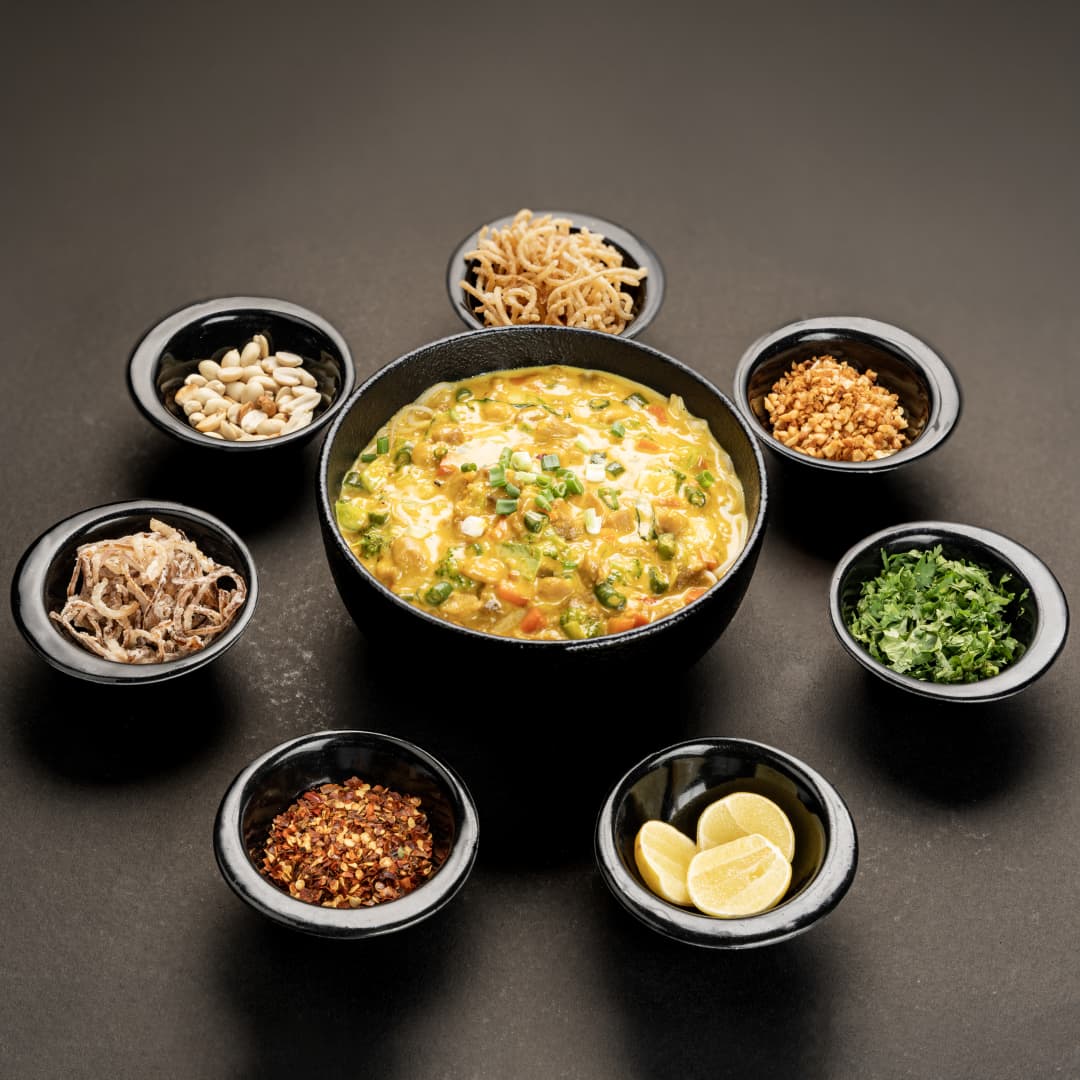
If you enjoy khao suey, laksa might already feel like a familiar friend. Both dishes bring noodles and warming flavours together in a comforting bowl, but their culinary identities are distinct. Khao suey traces its roots to the Burmese dish ohn no khao swè, a coconut-based noodle soup that has inspired many variations across South and Southeast Asia. In Indian kitchens, it is often served with an assortment of toppings, including crunchy noodles, sliced onions, herbs, lime and chillies. The fun is in customising each mouthful. Curry laksa generally leans into its aromatic spice paste, with ingredients such as lemongrass, galangal and shrimp paste contributing to its characteristic flavour. Khao suey often places greater emphasis on its own coconut curry base and the contrast between the silky broth and its crunchy garnishes. If you love discovering the stories behind Pan-Asian food in Bangalore, these two bowls are a delicious reminder that similar ingredients can lead to entirely different experiences.
Where to Find Laksa in Bangalore
At Xin, a good meal is an invitation to explore flavours, discover something new and enjoy the little details that make a dish memorable. Laksa brings that spirit to the table with its fragrant coconut broth, warming spices and satisfying noodles. You can find Laksa at Xin Fine Koramangala and Xin Den HSR in Bangalore, as well as Xin Coonoor and Xin Ooty. Choose chicken or prawn and settle into a bowl that brings together the comfort of a hearty meal and the character of Southeast Asian cooking. Xin's Master Bowls are designed as complete 400 g meals for one person, so your laksa is a bowl to enjoy all to yourself. If you are in the mood to explore further, Khao Suey offers another take on coconut curry noodles, while Singapore Chilli brings a different expression of Southeast Asian heat. Whether you are discovering Pan-Asian restaurants in Bangalore for the first time or looking for a new favourite, laksa is a lovely place to start. And the next time you taste that fragrant, creamy broth, remember that the real story began with the spice paste.
Frequently Asked Questions
Where can I eat laksa in Bangalore?
You can enjoy Laksa at Xin Fine Koramangala and Xin Den HSR. Xin also serves it at Xin Coonoor and Xin Ooty, with chicken or prawn options.
What makes curry laksa different from other noodle soups?
Curry laksa is known for its aromatic spice paste and rich coconut-milk broth. Ingredients such as chillies, lemongrass, galangal and shallots create its distinctive flavour, while noodles and toppings make it a satisfying meal.
Is laksa very spicy?
The heat depends on the recipe and the quantity of chillies used. A well-balanced curry laksa combines warmth with coconut richness and aromatic depth, so the spice complements the other flavours rather than overwhelming them.
Is laksa the same as khao suey?
No. Laksa has roots in the Malay world and Peranakan food traditions, while khao suey comes from Burmese cuisine. Both can feature coconut-based broths and noodles, but their seasoning, accompaniments and culinary histories differ.
What should I try after laksa?
If you enjoy laksa's creamy, spiced broth, try khao suey for another comforting coconut noodle dish. You can also explore other Master Bowls at Xin to discover more of the flavours that make Pan-Asian cuisine so exciting.